Deciding to get help for alcohol or drug use is a big step. Figuring out where to get help can feel like a second mountain to climb.
Search for an addiction treatment facility in Michigan and you will find a long list of websites, directories, and ads, many of which sound alike. Words like “evidence-based,” “compassionate,” and “individualized” show up everywhere. It can be hard to tell which programs are truly qualified, which are the right fit, and which to avoid.
We want to make that process a little clearer.
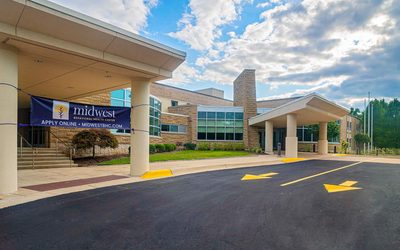
As Midwest Behavioral Health Center (MBHC) prepares to open in Tecumseh, we have put together this guide to help Michigan residents and their families evaluate any substance use treatment program with confidence. It covers how licensing actually works in Michigan, what accreditation means, how levels of care are matched to your needs, why co-occurring mental health care matters, which questions to ask, and which red flags to watch for.
Why the Right Fit Matters
Choosing a substance use treatment program is not just about finding an open bed or the first available appointment. The right match can make a real difference in how engaged you feel, how well treatment addresses your needs, and how prepared you are for life after the program ends.
Access to care is also a real challenge in Michigan. A 2019 analysis by Altarum, a nonprofit research organization based in Ann Arbor, estimated that only 28% of the 581,000 Michiganders with a substance use disorder received treatment. The same analysis found significant differences in unmet need across the state.
When options feel limited or confusing, it is tempting to go with the first program that picks up the phone. Taking a little time to evaluate your options can help you find care that truly fits.
Step 1: Start With Your Needs
Before comparing facilities, it helps to get clear on what you or your loved one actually needs. Consider:
- What is the primary substance use concern? Alcohol, opioids, stimulants, cannabis, prescription medications, or more than one substance?
- Is there a risk of withdrawal? Some substances, including alcohol, benzodiazepines, and opioids, can cause withdrawal that may require medically supervised detox before other treatment begins.
- Is there a co-occurring mental health condition to consider? Anxiety, depression, trauma, and mood disorders often occur alongside substance use. If they are part of the picture, look for a program that can treat both at the same time.
- Who needs care? An adult or a teen? Many programs serve specific age groups only.
- How is substance use affecting daily life? Is it impacting work, school, relationships, health, or safety?
- What support do you have at home? A stable, substance-free environment can make outpatient care more realistic.
You do not need to have every answer before reaching out. A good program will help you work through these questions during the assessment process.
Step 2: Understand the Levels of Care
Addiction treatment is not one-size-fits-all. Care is offered at different levels of intensity, and the right level depends on your clinical needs.
Addiction treatment programs commonly use the American Society of Addiction Medicine (ASAM) criteria to match people to the right level of care. Under ASAM, standard outpatient services for adults involve fewer than 9 hours per week, while Level 2.1 intensive outpatient programs provide 9 to 19 hours of structured weekly programming for adults.
Here is a general overview:
Medically Managed Withdrawal (Detox) Short-term medical care to help someone safely withdraw from alcohol or drugs. Detox is a starting point, not a complete treatment on its own.
Outpatient Treatment Typically one or two sessions per week. This works well for people with milder substance use concerns who are generally stable.
Intensive Outpatient Program (IOP) Multiple sessions per week, usually a few hours at a time. IOP provides more structure and accountability than weekly therapy while allowing you to live at home and often keep working. Learn more in our companion post, What Is an Adult Intensive Outpatient Program and How Does It Work? (sibling post: link once published)
Partial Hospitalization Program (PHP) Treatment most weekdays for several hours a day. PHP offers a high level of clinical support without an overnight stay and is often used as a step down from residential care. See our guide, What Is a Partial Hospitalization Program (PHP) for Adults in Michigan?
Residential Treatment 24-hour care in a structured, supervised setting for people who need more support than outpatient levels can provide.
A quality facility should be able to explain which levels of care it offers, how it decides which level is right for you, and how it helps you move between levels as your needs change. If you are weighing two outpatient options, our post on how IOP is different from PHP can help.
Step 3: Understand How Licensing Works in Michigan
Licensing in Michigan depends on the type of program, so it helps to know what to look for at each level of care.
Outpatient programs. Michigan revised its substance use disorder administrative rules effective June 3, 2026, and outpatient services no longer require a facility-level license. For outpatient care, the licensing that matters rests with each individual clinician rather than with the facility as a whole. You can confirm that a psychiatrist, psychologist, counselor, or social worker holds an active license in good standing through LARA’s health professional license lookup.
Insurance credentialing. If a facility is in network with your insurance plan, it has gone through the plan’s credentialing process, which checks that its clinicians meet licensing requirements. Asking whether a program is in network with your plan is a useful quality check on its own.
Adult residential programs. Residential substance use treatment for adults is licensed by the Michigan Department of Licensing and Regulatory Affairs (LARA). LARA’s substance use disorder program search includes license activity, survey reports, and complaint investigations.
Residential programs for adolescents. Residential programs for teens are licensed differently. In Michigan, the Division of Child Welfare Licensing within the Michigan Department of Health and Human Services (MDHHS) licenses Child Caring Institutions, which provide 24-hour care for minors.
Whatever the level of care, a quality program should be able to clearly explain how its services and staff are licensed, credentialed, or certified.
Step 4: Look for National Accreditation
Licensing and credentialing cover the basics. National accreditation goes a step further.
SAMHSA’s guide to Finding Quality Treatment for Substance Use Disorders lists accreditation as the first of five signs of quality treatment. It encourages people to ask whether a program is licensed or certified, whether it is in good standing, and whether staff are qualified.
The two most widely recognized accrediting organizations for behavioral health programs are CARF International and The Joint Commission. Both accredit substance use treatment and mental health programs, which matters if you or a loved one needs care for co-occurring conditions. Accreditation involves an outside review of a program’s clinical practices, policies, and safety standards.
You can typically verify accreditation directly through each organization’s website. If a program says it is accredited, it should be able to tell you by whom and for which services.
Step 5: Evaluate the Clinical Team and Assessment Process
The people providing your care matter as much as the building they work in.
Ask About the Team
A strong addiction treatment program usually includes a multidisciplinary team. That may involve:
- Physicians or psychiatric prescribers for medical care and medication management
- Certified addiction professionals
- Licensed therapists, such as Licensed Professional Counselors (LPCs) and Licensed Master Social Workers (LMSWs)
- Nurses and case managers
- Mental health clinicians who can address co-occurring conditions
Do not hesitate to ask about staff credentials, how often you will see a prescriber, and how the team communicates about your care.
Ask About the Assessment
A thorough clinical assessment is one of the clearest signs of a quality program. Before recommending a level of care, a program should take time to understand your substance use history, withdrawal risk, physical health, mental health, safety, support system, and goals.
Be cautious of any program that recommends a level of care without a real assessment, or that seems to recommend the same program for everyone. For a look at what a comprehensive evaluation can involve, see our post on 5 Easy Steps to Getting a Professional Psychiatric Evaluation.
Step 6: Look for Evidence-Based and Integrated Care
SAMHSA’s five signs of quality substance use treatment go beyond accreditation. They also include medication, evidence-based practices, family involvement, and ongoing supports.
Here is what to look for in each area.
Medication when appropriate. For opioid and alcohol use disorders, Medication-Assisted Treatment (MAT) has strong research support. A program that refuses to consider FDA-approved medications for these conditions deserves a second look.
Evidence-based therapies. Ask which therapies the program uses and why. Common evidence-based approaches include Cognitive Behavioral Therapy (CBT), Dialectical Behavior Therapy (DBT), motivational interviewing, and trauma-informed care.
Integrated care for co-occurring conditions. Substance use and mental health conditions often occur together. The best outcomes usually come from treating both at the same time with a coordinated team, rather than treating one and referring out for the other. MBHC’s planned co-occurring disorder treatment for adults and for teens is being built around this integrated approach.
Family involvement. Families can be a powerful source of support in recovery. Ask how the program involves loved ones, such as family therapy or education sessions, when it is appropriate and when the patient wants it.
Ongoing support and aftercare. Recovery continues after a program ends. Ask how discharge planning works, what step-down options are available, and how the program helps you stay connected to recovery support.
Step 7: Consider Practical Details
Clinical quality comes first, but practical factors can affect whether treatment is sustainable.
- Location and travel time: How far will you travel several times a week?
- Telehealth options: Are virtual sessions available for any part of the program? MBHC plans to offer telehealth options for eligible adults statewide once we open.
- Scheduling: Are there morning or evening tracks?
- Age-specific programming: Does the program serve your age group with care designed for it?
- Cost and coverage: Contact your insurance provider to ask about your substance use treatment benefits and in-network options. SAMHSA also notes that each state has funding to help provide treatment for people without insurance.
- Timeliness: SAMHSA’s guide suggests that the ability to get an appointment quickly is one indicator of quality.
Step 8: Watch for Red Flags
Unfortunately, not every program that advertises online has your best interests in mind. The Partnership to End Addiction offers helpful guidance on warning signs to watch for when seeking treatment. Based on that guidance, be cautious if a program or website:
- Makes it hard to find a physical address or to speak with someone actually at the facility
- Uses a generic 800 number that routes to a referral service rather than the program itself
- Relies heavily on stock photos instead of showing the actual facility and team
- Guarantees results or promises a “cure”
- Pressures you to commit immediately without an assessment
- Offers free travel, housing, or other incentives to enroll
- Cannot clearly answer questions about licensing, credentialing, accreditation, staff, or treatment approach
Patient brokering, in which third parties are paid to steer people toward specific facilities, is a real concern in the addiction treatment industry. When in doubt, go directly to the program’s own website, verify licenses through LARA or MDHHS, and use neutral tools like SAMHSA’s FindTreatment.gov locator.
Questions to Ask Any Addiction Treatment Facility
Here is a list of questions you can bring to any program you are considering:
- How are your services and clinical staff licensed, and are you in network with my insurance?
- Are you accredited by CARF International or The Joint Commission?
- Which levels of care do you offer?
- How do you determine which level of care is right for me?
- What does your clinical assessment include?
- Do you offer or coordinate medically supervised detox if I need it?
- Do you offer Medication-Assisted Treatment when appropriate?
- Do you treat co-occurring mental health conditions at the same time?
- Which evidence-based therapies do you use?
- How do you involve families?
- What does a typical day or week look like?
- Do you offer telehealth options?
- What does aftercare and relapse prevention planning look like?
- How do you coordinate with my other providers?
A quality program will welcome these questions and answer them clearly.
A Note on Crisis Situations
If you or someone you love is in immediate danger or experiencing a possible overdose, do not wait to research programs. Call 911 or go to the nearest emergency room. You can also call or text 988 to reach the 988 Suicide & Crisis Lifeline, available 24/7.
How We’re Approaching This at MBHC
We believe people deserve to make this decision with clear, honest information. That is why we encourage everyone to ask these questions of every provider they consider, including us once we open.
Midwest Behavioral Health Center is preparing to serve teens and adults from our location in Tecumseh, Michigan. Our planned substance use and co-occurring services include:
- For adults: Substance use disorder treatment, Partial Hospitalization (PHP), and Intensive Outpatient (IOP), with telehealth options for eligible adults
- For teens: Substance use programs, PHP, IOP, and residential care for ages 13 to 17
Our mission is to transform lives through evidence-based care, and we look forward to becoming a trusted resource for Michigan families. Take a look inside our facility with our virtual tour, or explore our Adult Programs and Child & Teen Programs.
You May Also Enjoy
- How Is IOP Different From PHP for Adults in Michigan?
- What Is a Partial Hospitalization Program (PHP) for Adults in Michigan?
Stay Connected
Follow Midwest Behavioral Health Center on Instagram and Facebook for updates, resources, and news as we prepare to open our doors.
Sources
- Altarum, Access to Behavioral Health Care in Michigan (2019 data)
- ASAM levels of care, as summarized in Addictions Counseling (College of DuPage open textbook)
- Michigan LARA, Substance Use Disorder Licensure and Find a Substance Use Disorder Program
- Michigan LARA, Bureau of Professional Licensing: Health Professional License Lookup
- Michigan Department of Health and Human Services, Division of Child Welfare Licensing: What Is a Child Caring Institution?
- SAMHSA, Finding Quality Treatment for Substance Use Disorders (PEP18-TREATMENT-LOC)
- Partnership to End Addiction, “Seeking Help: What to Look For, What to Avoid”
- SAMHSA, FindTreatment.gov