
Anxiety Treatment for Kids & Teens in Michigan
Anxiety is the most common mental health condition in young people — and one of the most treatable. But untreated anxiety doesn't stay the same. It grows. It shapes how they see themselves, what they're willing to try, and who they become.
At MBHC in Tecumseh, Michigan, we provide individualized anxiety treatment for kids and teens using evidence-based therapies purpose-built for the developmental stage your child is in right now. Telehealth available statewide.
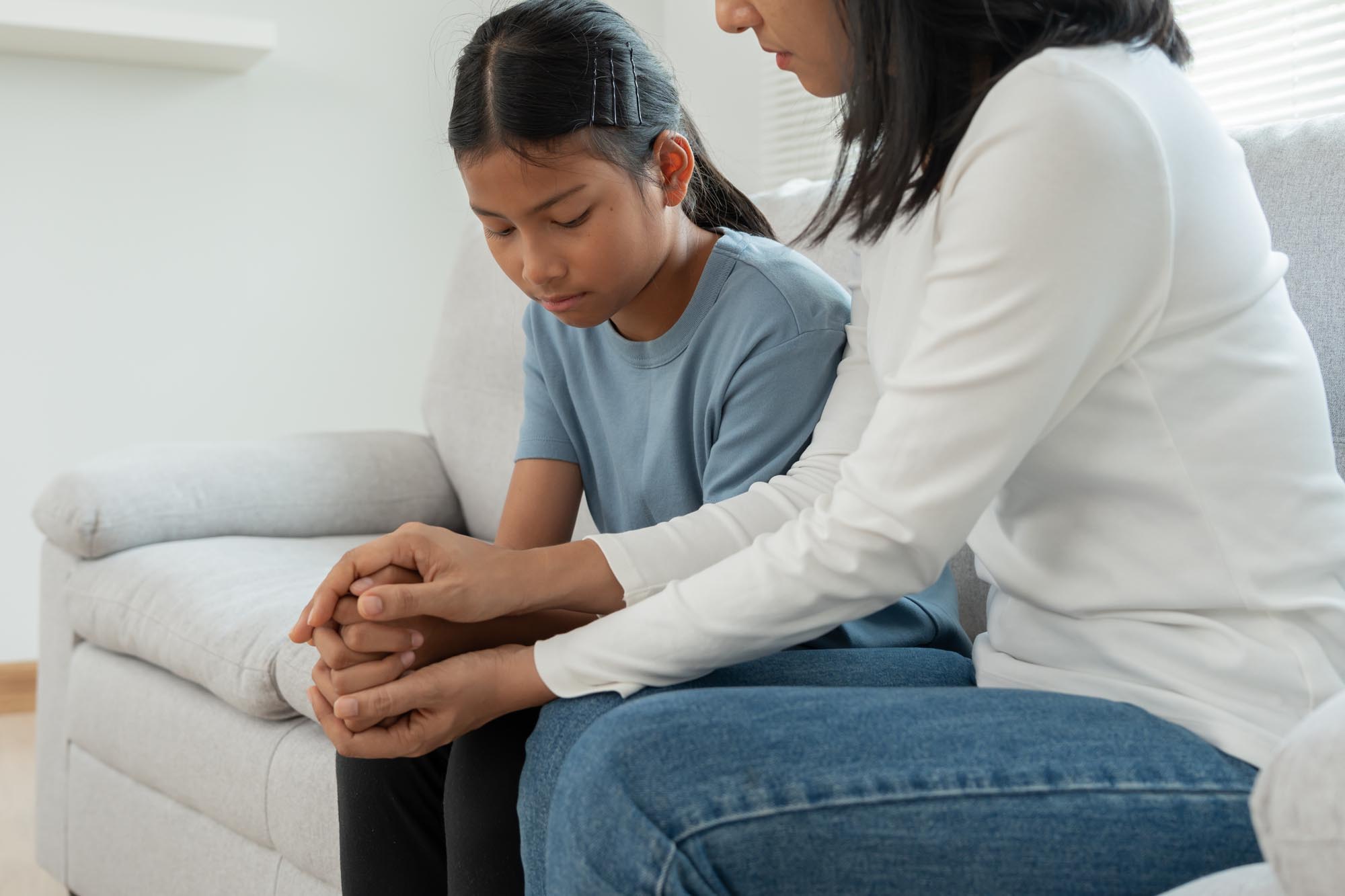
What Anxiety Looks Like in Kids and Teens
Anxiety in young people rarely looks like the quiet, internal worry adults picture. In children and teens, it often shows up as avoidance, meltdowns, school refusal, or physical complaints. Many anxious teens are labeled as difficult, dramatic, or unmotivated. If several of these patterns feel familiar, speaking with a mental health professional is a meaningful next step.
These are not personality traits. They are symptoms — and they respond to treatment.
- Persistent worry that is difficult to control or 'turn off'
- Avoidance of school, social situations, or previously enjoyed activities
- Physical complaints — stomachaches, headaches, nausea — without clear medical cause
- Difficulty sleeping, falling asleep, or staying asleep
- Reassurance-seeking — repeated questions, needing to check in constantly
- Emotional outbursts or shutdowns in triggering situations
- Perfectionism or fear of making mistakes
- Panic attacks — racing heart, shortness of breath, or dizziness
- Social withdrawal, fear of judgment, or refusing to speak in certain situations
Anxiety is remarkably easy to misattribute in young people — and the gap between symptom onset and first treatment is, on average, more than a decade.
- Anxious teens are often labeled 'difficult' or 'unmotivated' rather than struggling
- Physical symptoms get investigated medically before mental health is considered
- School refusal is treated as a behavioral issue rather than an anxiety response
- High-achieving kids mask symptoms well until they can't anymore
- Girls' anxiety is more likely to be internalized and go unrecognized
If anxiety is affecting your child's daily life, a clinical evaluation is the right next step — not a wait-and-see approach.
- Symptoms have been present for more than a few weeks
- Anxiety is interfering with school attendance or participation
- Your child is avoiding more and more situations over time
- Family life is being organized around managing your child's anxiety
- Prior attempts to manage it on your own haven't worked
This information is for educational purposes and is not a substitute for a clinical assessment. If your child is in immediate danger, call 988 (Suicide & Crisis Lifeline) or go to your nearest emergency room.
Anxiety Disorders We Treat in Kids and Teens at MBHC
MBHC treats the full range of anxiety disorders in children and adolescents. Each presents differently — and each requires a treatment approach tailored to its specific features.
Generalized Anxiety Disorder
Persistent, excessive worry about multiple areas of life — school, family, health, the future — that the child finds difficult to control. Often accompanied by restlessness, fatigue, difficulty concentrating, and sleep disruption.
Social Anxiety Disorder
Intense fear of social situations and judgment by others. May present as school refusal, avoidance of class participation, or extreme distress before social events. Frequently misread as shyness — but far more impairing.
Panic Disorder
Recurrent unexpected panic attacks and persistent worry about having more. Teens with panic disorder often begin avoiding situations they associate with past attacks, which can dramatically shrink their world over time.
Separation Anxiety
Developmentally excessive fear of separation from attachment figures. Common in younger children but also present in adolescents. May manifest as school refusal, physical complaints on school mornings, or distress when parents aren't present.
Specific Phobias
Intense, irrational fear of specific objects or situations — needles, storms, vomiting, dogs — that leads to significant avoidance and impairment. Highly treatable with targeted exposure therapy.
Selective Mutism
Consistent failure to speak in specific social situations despite speaking in others — typically identified at school age. A severe form of social anxiety requiring specialized behavioral treatment.
How MBHC Treats Anxiety in Kids and Teens
Effective anxiety treatment for teenagers is not about eliminating all worry — it's about teaching young people to engage with the world despite uncertainty, and reducing the role anxiety plays in the decisions they make every day.
Cognitive Behavioral Therapy (CBT)
The gold-standard treatment for anxiety in children and teens. Helps young people identify the thought patterns that fuel anxiety, challenge distorted beliefs, and break the avoidance cycle through graduated exposure exercises.
Exposure & Response Prevention (ERP)
For anxiety driven by avoidance — including OCD-spectrum presentations — ERP involves structured, graduated exposure to feared situations while resisting safety behaviors. The most evidence-based path to lasting anxiety reduction.
DBT for Adolescents (DBT-A)
When anxiety overlaps with emotional dysregulation — as it often does — DBT-A skills including distress tolerance and mindfulness provide teens with a concrete toolkit for managing acute anxiety in real time.
Family Therapy & Parent Involvement
Parents are essential participants, not observers. Accommodation of anxiety — avoiding triggers, providing excessive reassurance — maintains and often intensifies anxiety. Family therapy helps the whole system change.
Motivational Interviewing (MI)
Meeting teens where they are in their readiness to engage — critical for adolescents who are reluctant or who have been brought to treatment by a parent rather than choosing it themselves.
Psychiatric Evaluation & Medication Management
SSRIs are a first-line pharmacological treatment for anxiety in adolescents and are most effective when combined with CBT. Medication is always coordinated with therapy — never the sole intervention.
Anxiety Treatment Levels for Teens in Michigan
Not every teen with anxiety needs the same level of care. MBHC provides the full continuum — from weekly outpatient therapy to partial hospitalization — so treatment intensity matches your child's actual needs.
Outpatient Therapy for Kids & Teens
The most flexible entry point into anxiety treatmentOutpatient therapy involves regular scheduled sessions — typically one to two per week — with a therapist, psychiatrist, or both. It integrates into school schedules and daily life with minimal disruption.
Services include individual therapy, family therapy, group therapy, psychiatric evaluation, and medication management. In-person and telehealth options available throughout Michigan.
- Has mild to moderate anxiety and is safe at home
- Is attending school and managing daily life with support
- Is stepping down from IOP or PHP
Teen IOP — Intensive Outpatient Program
Structured support built around your teen's school scheduleIOP provides multiple weekly sessions of individual therapy, group therapy, family involvement, and skills training — designed to be compatible with school attendance. More structured than weekly outpatient, more flexible than PHP.
Many teens in IOP attend school on non-treatment days and return to school in the afternoon on treatment days.
- Anxiety is significantly impairing daily functioning
- Can continue school attendance during treatment
- Has not responded adequately to weekly outpatient therapy
- Has a stable, supportive home environment
Teen PHP — Partial Hospitalization Program
Full-day intensive treatment — your teen returns home each eveningPHP is the highest level of outpatient care — the bridge between IOP and residential. Teens attend full-day programming Monday through Friday with a multidisciplinary clinical team, then return home each evening.
Appropriate for teens in acute distress — including school refusal driven by panic or anxiety so severe it has stopped daily functioning — or those stepping down from inpatient care.
- Anxiety has stopped school attendance or daily functioning
- Is stepping down from inpatient or residential treatment
- Has not responded adequately to IOP
- Has a safe home environment to return to each evening
Serving Families in Lenawee County & Southeast Michigan
MBHC is located at 500 E Pottawatamie St, Tecumseh, MI 49286 — serving families throughout Lenawee County and southeast Michigan, including Adrian, Monroe, Jackson, and Hillsdale counties. Telehealth available for eligible patients across the state of Michigan.
500 E Pottawatamie St
Tecumseh, MI 49286
Frequently Asked Questions About Anxiety Treatment for Kids & Teens in Michigan
Common questions from parents and families in Michigan exploring anxiety treatment options for their children.
MBHC serves children and adolescents up to age 17. Our clinical team and therapeutic environment are specifically designed for young people — not adapted from adult programming.
Duration varies depending on severity, the specific anxiety disorder, and treatment response. Evidence-based CBT for anxiety in teens typically runs 12 to 20 sessions for focused presentations. Complex or long-standing anxiety — particularly with significant avoidance — may take longer. Your child's treatment team will discuss timeline and benchmarks with you throughout care.
Resistance is common — especially in anxious teens who may find the idea of talking about their anxiety anxiety-provoking in itself. Motivational interviewing and a strong therapeutic alliance are core to how MBHC works with resistant adolescents. Reaching out to our clinical team is still the right first step, even if your child isn't ready.
Yes. MBHC offers telehealth for outpatient anxiety treatment for eligible children and teens across Michigan — making high-quality care accessible regardless of distance from our Tecumseh location.
It depends on the level of care. Standard outpatient therapy is scheduled around school hours with minimal impact on attendance. Our IOP for teens is specifically designed to be compatible with school schedules. PHP involves full-day programming and may require coordination with your child's school — our team can assist with documentation for educational accommodations when needed.
Family involvement is a core component of anxiety treatment at MBHC — not optional. Research shows that parental accommodation of anxiety can maintain and intensify it over time. Family therapy helps parents understand what drives their child's anxiety and how to respond in ways that support recovery rather than reinforce avoidance.
Anxiety Resources for Kids, Teens & Families in Michigan
Trusted national and Michigan-specific organizations providing reliable information on childhood and adolescent anxiety — including local Lenawee County services near our Tecumseh location.